Categories
Geralt - Humans Are Monsters Uncategorized

Misery

“I’m your number one fan.”

My mom says this book terrifies her, but I don’t quite understand. I’m her number one fan, and I’m sure she would love it if I took care of her and gave her a lovely room and hobbled her legs so she could never leave me.

Maybe the difference is I’m a cat and not a psychotic nurse.

Hello, everyone! This is Geralt back at work again reviewing the books The Writer makes me read. Apparently this month is supposed to be super scary for humans. I don’t want my mom to be scared, so I make sure I fall asleep on her face so she can’t read the scary words in the stories.
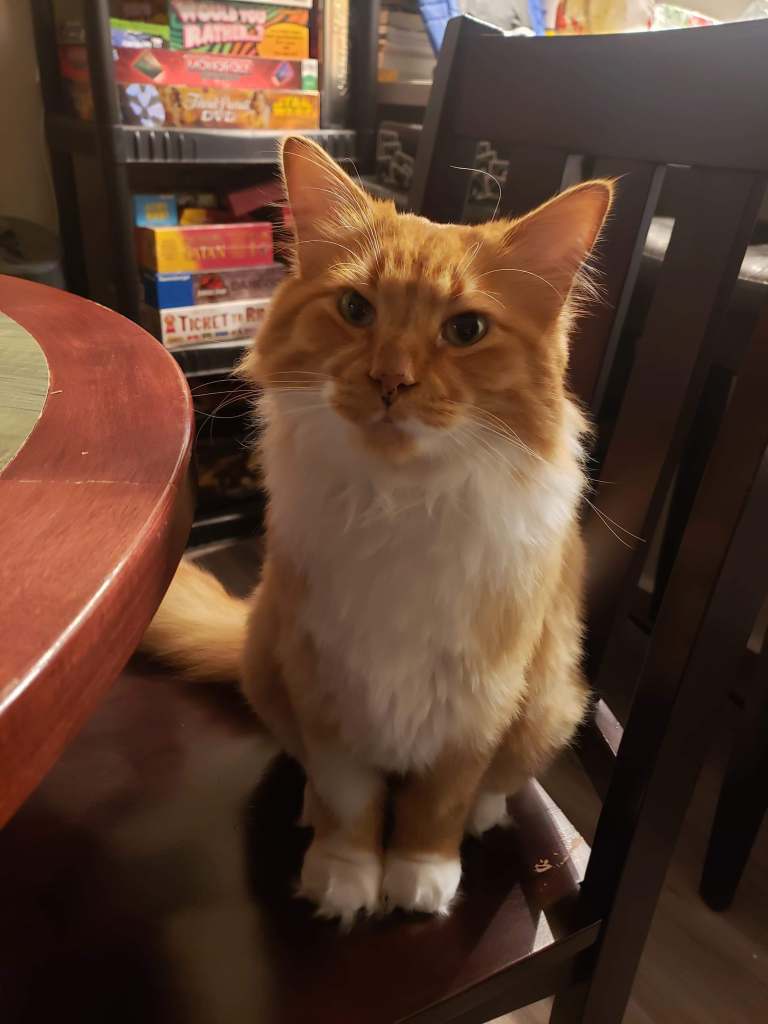
I’m her number one fan…

She just doesn’t appreciate everything I do for her, just like Paul isn’t grateful enough for all Annie Wilkes is willing to do for him.

The Writer is giving me a weird look.

Anyways, I’m going to review Stephen King’s Misery, a 1987 horror and psychological thriller that continues to terrify audiences. It was one of King’s only books to not incorporate fantastical elements (such as pyrokinesis or telepathy), and also became one of his only great film adaptations.

So, what do I think of it?

Quite a lot.

The Plot

The plot is an excellent example of a contained story with few locations. In Misery, the protagonist is Paul Sheldon, an author who has been restricted by his own popularity. He feels smothered by a character he created, Misery Chastain, and is unable to branch out to other endeavors because his cheesy, trashy romances pay the bills.

Sheldon is an alcoholic and decides, during one of his binges, to try and drive to Los Angeles instead of return to New York. He crashes while trapped in a snowstorm in Colorado, and wakes up injured in the home of former nurse Annie Wilkes.

The story rapidly goes downhill from there. Wilkes is unstable, fanatically obsessed with Misery and Sheldon, and drugging the writer to keep him compliant and addicted so he doesn’t leave. When she discovers her favorite character has been killed off in the final novel of the Misery Chastain series, she flies into a psychotic rage and abandons Sheldon for two days without food, water, or his painkillers.

To make matters worse, many of the keys stop working on the typewriter. The horror!

What happens next is a modern Scheherazade tale full of nightmare fuel. Sheldon must write a new book that brings Misery back to life while being tormented by Wilkes’ whims. He cannot escape, and any resistance is met with harsh punishments, including a truly gruesome hobbling and the loss of his thumb to an electric knife.

The only way Sheldon can win is by outsmarting Wilkes and using her own obsession against her – but not without losing pieces of himself physically and metaphorically.

Also, there were no cats in this book. Shame. There is a pig named Misery though, so that’s something.

The Review

The Writer considers this to be one of the scariest stories she ever read, and it’s easy to see why. Annie Wilkes is a classic example of a character who is deeply disturbed. From her first appearance, it is clear there is something just off about her. Once she doesn’t get her way, her rage and psychotic episodes become obvious.

However, while Wilkes might be the greatest villain King ever wrote, Misery really stands out for its metaphors and writing style. Paul Sheldon is addicted – to painkillers, to alcohol, and to writing. He must battle his addiction to make it out alive, and many of the events and passages in the book were taken from King’s own experiences trying to get clean.

The writing is linear but includes many passages from Sheldon’s own novels, as well as his numerous asides and memories. What the reader knows of Wilkes and the world outside is limited to only what Sheldon knows, meaning we have the same anxiety and fear as the poor trapped man.

While some parts of the book can drag and Annie seems to be a cornucopia of mental illness with no real diagnosis, this is one horror volume that will leave readers at the edges of their seats.

The only downside is you might need a trash can nearby when you read the hobbling scene. If you can make it without vomiting, you can survive the rest of the book.

Plus, the movie is stellar.

I never knew Kathy Bates would haunt my nightmares for years.

Overall, I give misery 5/5 Paws.

While there are no cats, there are plenty of feline frights to be had. Just don’t read this book if you are an amateur writer. You will be afraid to ever publish anything again.
Categories
Uncategorized

Dagon (2001)

No one leave Imboca. People come, but no one leave.

Why do you people always make me do the water ones? Just because H.P. Lovecraft had a phobia of fish doesn’t mean every Lovecraftian story has to take place in or near the sea. Well, except this one since it’s, you know, Dagon.

This is Flint, back again to enjoy the madness. The Good Doctor even gave me a new hat to celebrate Spooktober.

I’m spooktacular. Worship me.

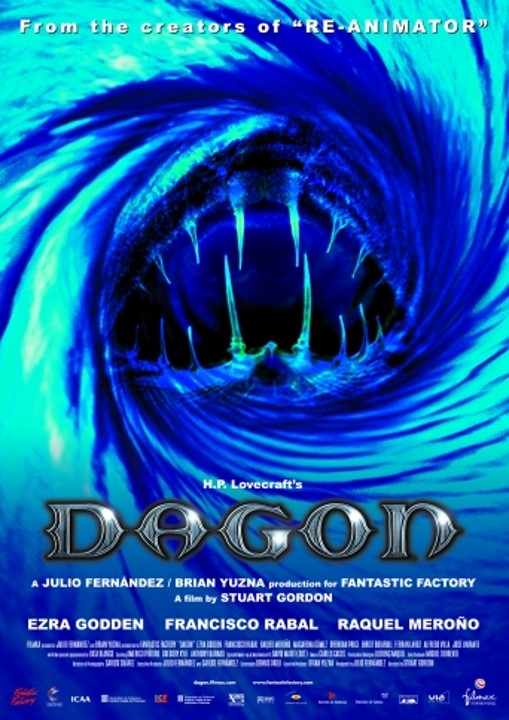
Dagon is a 2001 Spanish film originally released in Spain and available in three languages: Spanish, Galician, and English. As the name suggests, it draws heavily from cosmic horror and the stories of its creator, Mr. Lovecraft.

However, despite the film’s title, it’s important to note the movie has little to do with the actual story “Dagon” and is more similar to “The Shadow over Innsmouth.” The plot is adapted to fit in the Spanish countryside, and the name of the town is Imboca, a literal translation of the English Innsmouth.

Dagon is considered one of the best film adaptions of an H.P. Lovecraft story, and it is easy to see why. Despite being traumatized by some scenes, I thoroughly enjoyed it.

So just what is the creepy town of Imboca? Who are our characters? And do we get to see any monstrosities along the way?

Read on to find out.

The Plot

The plot can be hard to follow when first watching the film as there are several dreams, flashbacks, and characters that viewers need to become accustomed to. However, the basic premise is simple. Paul Marsh is a successful businessman vacationing off the coast of Spain with his girlfriend, Barbara, and their two friends Howard and Vicki.

A sudden storm crashes the ship and forces Paul and Barbara into a lifeboat, where they reach the town of Imboca. There, they find the town remarkably deserted and are only able to locate a priest, who finds two fishermen to take Paul back to the ship to rescue the trapped Howard and Vicki. The pair are, surprisingly, missing, and so is Barbara when Paul returns.

While waiting in a dilapidated and disgusting hotel, Paul dreams of a sharp-toothed mermaid. When he wakes, he must flee because the building is surrounded by half-human, half-fish hybrids eager for his blood. He encounters a tannery full of human skins and then takes shelter with Ezequiel, a drunkard and the last full human in town.

Things only get worse from there. Ezequiel reveals the inhabitants of Imboca traded their humanity to Dagon in exchange for prosperity and have become his cult. Men are killed for blood sacrifices, and the women are raped by Dagon and forced to birth icthyic offspring. These were the fates of Howard and Vicki, the latter of which commits suicide.

Trust me, it is not a roaring good time…

Over the last hour of the film, Paul learns he is one of the descendants of Dagon – his mother having been brutally raped but escaping – and has been betrothed to his mermaid half-sister, Uxia. Uxia informs him they must marry and Barbara must bear Dagon’s offspring.

Ultimately, things do not end well for anybody, despite Paul setting many people on fire. Barbara dies, Ezequiel is skinned alive, and Paul lives forever underwater with his sister and an eldritch abomination.

The Review

Listen. I love tuna, but Dagon has made me reconsider my preferences. This film is not for the squeamish because there are tons of graphic violence, unnerving material, and Nihilistic themes. However, it touches upon some crucial Lovecraftian literary ideas which are often lacking in other movies and even many written adaptations of the mythos.

Incest. Degeneracy. Horrifying things human and feline were not meant to know.

Luckily, it left out a lot of the nastier subjects, including the virulent racism, prejudice, and sexism.

This is the first movie we the felines have reviewed, but it is a cult classic and a favorite for the Writer this time of year. The actors know they are in a cheesy, ooey gooey film and deliver their lines with a combination of sincerity and good humor. The set is glorious in how it depicts disrepair and decrepitude, and many scenes are difficult to watch because of how horrifying they are.

Paul, the protagonist, is a bit of a milquetoast and a lukewarm protagonist, but does anyone actually watch a horror movie for someone besides the villain? He also redeems himself in the end by setting himself and many others on fire with kerosene. Sadly, it does not last.

I have also never had as much sympathy for a human as I did for Vicki and Barbara. What horrible fates. Hentai may be popular, but does anyone actually want to be violated by a terrifying eldritch tentacle monster?

I DON’T.

I give Dagon 4/5 Paws. I want to give it 5, but certain parts of the movie drag on and some of the dialogue is difficult to hear. However, and I do not say this lightly, I would gladly watch it again and again.

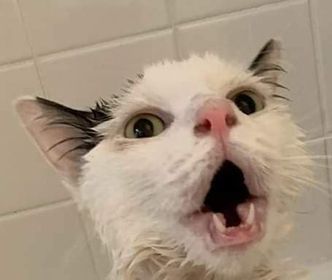
Now would somebody please get me a towel? And some nip? I need to forget what I’ve seen. Wait, what do you mean I need another bath? No. No!

Please help me….
Categories
Geralt - Humans Are Monsters

The Black Cat

“For the most wild, yet most homely narrative which I am about to pen, I neither expect nor solicit belief.”

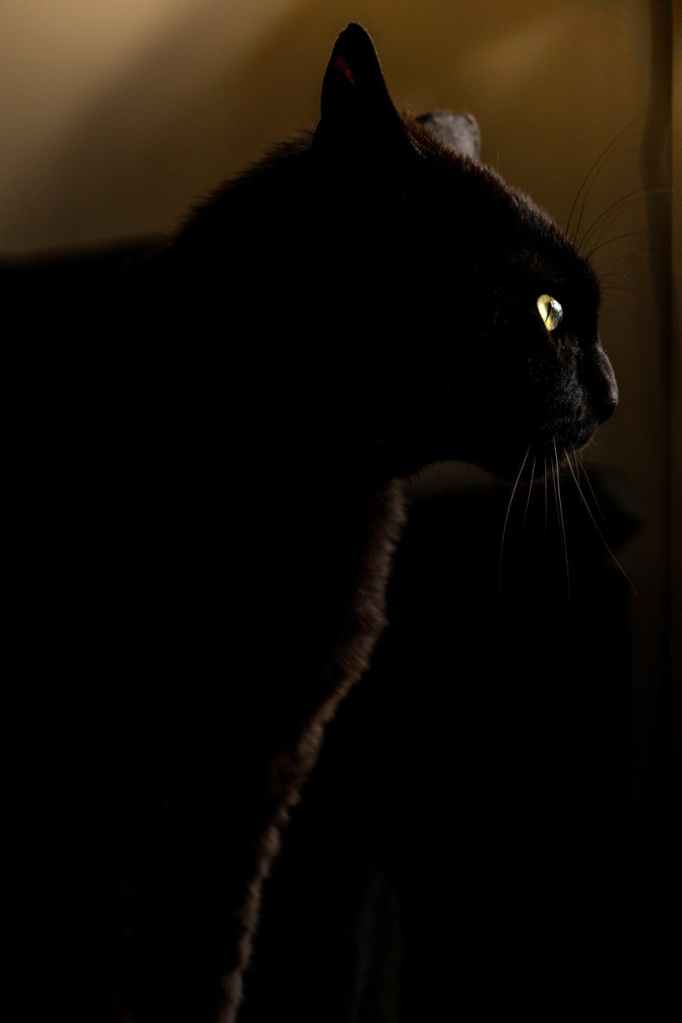
Humans are bastards. This is a well-known fact. Not everyone, obviously. I do still love the Writer more than any other human in the world. But the average person, especially one facing a crippling addiction, can be cruel.

“Pluto — this was the cat’s name — was my favorite pet and playmate.”

The Black Cat is one of the most famous short stories by Edgar Allan Poe, first appearing in 1843. Like many horror stories, it begins with the eponymous narrator revealing his story to an ambiguous audience after the unsettling events have occurred.

In this case, the narrator is days away from hanging for the brutal murder of his wife. But it’s okay, he didn’t mean to kill the woman – he was aiming for the cat.

Seriously.

Why do horror stories always have to take out the violence on us? Are we not good enough? Do we not offer tempered disdain and the occasional nose boop?

But I’m beside myself. To the plot!

The Plot

The story is simple. The narrator was married and possessed a beloved black cat named Pluto, whom he loved dearly. Unfortunately, he started drinking and became consumed by the alcohol.

As one often does, the narrator became irritable and violent, attacking his wife and cat. One night, while drunk, he thinks Pluto is avoiding him. Pluto runs when the narrator tries to grab him. Enraged, the narrator picks Pluto up and stabs out his eye with a pen knife.

Bastard.

Although at first filled with remorse, the narrator soon despises Pluto for avoiding him. One day, he catches the cat and hangs it from a tree, killing it. That night, the house catches fire and the narrator, his wife, and all of his servants must flee.

Why did he even have a noose on hand?

Things go downhill from here. The narrator returns to his burned home only to find an imprint of a cat hanging from a noose left in the ashes. He runs away once more and lives in his new home, his guilt growing. One day, at the bar, he finds a cat that looks just like Pluto, even missing an eye. The only difference is the white patch on its chest.

Since this is a Poe story, you can watch as the man descends into madness, overwhelmed by his own guilt. Over time, he becomes convinced the cat is haunting him and begins to see the white patch on the new cat’s chest as a set of gallows. Eventually, he tries to kill the cat with an ax, only to be stopped by his wife, whom he murders in a fit of rage.

He walls up his wife in the basement and accidentally also traps the cat inside. The feline’s yowling leads to his crime being discovered, and the man being tried for murder.

The Review

This story is classic Poe, and is another which once again features a cat as the manifestation of a human’s guilt. It is shocking, lurid, and gory. Although it tries to be psychological, it’s hard to feel any compassion for the narrator. He beats his wife, tortures his cat, and eventually murders in cold blood.

It’s hard to admit, but I don’t consider this a good story. All it does is show humans can be bastards and addiction is a beast. While there was space to explore some interesting themes, it was left unexplored.

Though, to be fair, part of my dislike of the story could be that it’s written in the traditional style of the early 19th century, which is very dry and purple for modern audiences. Plus, I’m a cat. I don’t want to read about some poor cat being stabbed and strung up to die in the garden.

But I suppose that’s what makes it horrific.

I’m going to give The Black Cat 3/5 Paws. It’s scary for me because I don’t want to think about my human getting drunk and hurting me, but humans might find it more gratuitously violent than anything else. And this is after the Hitman cat story!

Also, if you want to read it, you can find it here!

Remember we are watching….
Categories
Geralt - Humans Are Monsters

Christine

“His single-minded purpose. His unending fury.”

Christine by Stephen King is one of the most quintessential horror novels, and one of the first the Writer ever read. I, personally, don’t understand the appeal of cars. Every time I am in one, I end up at the vet.

I am better than any car.

But when she saw that copy at the discount bookstore, she just had to get it. Kind of like how some poor teen named Arnie just had to have a 1958 Plymouth Fury named Christine.

“Come on, big guy. Let’s go for a ride. Let’s cruise.”

Originally published in 1983, Christine examines just how deep a boy’s love for his first car truly is, and how deep an old man’s hate can be.

We the cats had to have a conference to determine just what genre the book could be considered. On the one paw, there is the supernatural element of Christine herself, a car capable of infiltrating a boy’s brain and taking over his life.

On the other paw, there is a distinct eldritch note to the book. The car is a living, breathing entity capable of warping reality. When some bullies break the lights and front bumper, all Christine needs is a little blood and time to right herself.

On another paw, there is a disturbingly human antagonist in the form of the late Roland LeBay. Although he dies early in the book, he sold the car to Arnie and his soul is potentially responsible for everything that happens.

In the end, LeBay won out. He may be a ghost, but it is his uniquely human characteristics of violent rage and obsession which color the book.

The Plot

This story is narrated by Dennis Guilder, the best friend of one Arnie Cunningham. During the summer of 1978, the pair drive through a neighborhood and see Christine out in the yard. Immediately, Arnie’s obsession begins and he purchases the car from the elderly LeBay.

Arnie slowly restores the car at a shady garage in town, but people begin to notice the haphazard way in which the repairs occur. Sometimes half the bumper is complete. Sometimes the windshield is done. No one ever sees Arnie working, and he has started to behave differently.

He is more confident, but more aggressive. And he loves that car. Almost as much as I love my mom….

Soon, people who have wronged Arnie start dying in vehicular deaths, but there is no evidence on Christine to tie Arnie to the murders. Plus, Arnie has airtight alibis.

Soon, Dennis comes to realize his friend is no longer his friend: He is LeBay.

The Review

It might surprise some readers, but Christine was not the first story about an animate vehicle. It is, however, one of the most well-written.

This story features a lot of the signature King flair, including small town distress, emotional abuse, a dangerous obsession, and plenty of references to pop culture and music.

The plot unfolds slowly enough that the reader is allowed to piece together the ultimate twist much faster than Dennis, but this adds to the suspense.

Honestly, this is a biased review. This was one of the first horror books the Writer ever read – having borrowed her dad’s copy and read it so much she destroyed the cover and first pages of the old paperback.

It truly is an interesting examination of a poor teen’s descent into madness as his soul is slowly possessed by a bitter old man full of rage and hate. At the end, you’re left pitying Arnie more than anything, and there is a strange sense of loss once Christine is destroyed.

Like any good horror story, Christine makes you empathize with the characters, and it touches on some significant teenage themes:

  • Trying to break loose of a mold set by your parents
  • Becoming intoxicated by a new sense of freedom
  • Learning that friendships don’t stay the same after high school
  • Struggling with the reality of drifting apart

Overall, this story deserves its 5/5 Paws. And I’m not just saying that because the writer threatened to withhold my tuna if I disagreed.

Is the car gone?